In memoriam
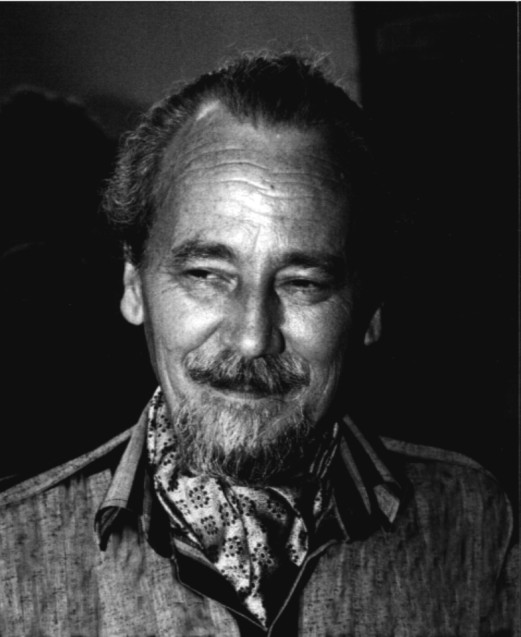
PETRE-MIHAI SAMSON
(1930-2001)
(1930-2001)
In memoriam |
PETRE-MIHAI SAMSON (1930-2001) |
On April 22, 2001 the “Emil Racovita” Speleological Institute of the Romanian Academy lost one of the most eminent researchers, a loyal and enthusiastic fellow whose scientific activities were decisive for the development of the mammal paleontology in Romania and for the study of the Quaternary.
Petre-Mihai Samson was born in Toulouse, France, on February 7, 1930, where his father followed a postuniversitary specialization at Paul Sabatier University. His early training was at the Saints Peter and Paul College of Ploiesti, a town near Bucharest where his family decided to move after the French sojourn. During his childhood his father taught him to love and respect the nature and all wild things. He graduate the Faculty of Biology in Bucharest (1955) and started his paleontological studies at the “Emil Racovita” Institute of Speleology newly reorganized (1956) under the direction of Professors Constantin Motas, Traian Orghidan and Margareta Dumitrescu. In 1956 he started excavations in the La Adam Cave (Central Dobrogea) which will be continued until 1980. He also organized excavations in other caves and rockshelters in the same area, bringing to light important sequences of strata containing Middle and Late Pleistocene mammalian remains associated on many levels with prehistoric implements.
Between 1960-1963 he headed the fieldwork in the Plio-Pleistocene fluvio-lacustrine sediments at Tetoiu (=Bugiulesti) and Irimesti in the middle Oltet valley (Western Dacic Basin). Besides the five partial skeletons of Mammuthus meridionalis found at Fântâna lui Mitilan (Irimesti) remains of Primate Paradolichopithecus in association with a rich mammal fauna were collected at Valea Graunceanului (Tetoiu).
Since 1962 he carried out paleontological investigation in the Brasov Depression in cooperation with the Laboratory for Quaternary Geology, Meudon, France, directed by Henriette Alimen. In 1969 he presented the stratigraphy of the Late Pleistocene in Romania at the INQUA Congress in Paris. Subsequent investigations in the Western Dacic Basin (1978-1996) at Slatina, Draganesti-Olt, Podari and Dranic showed the presence of small mammal associations ranging from the Early Pliocene to the Early Pleistocene.
He received his Doctor of Philosophy degree in Biology from the University of Bucharest in 1975. His thesis entitled Les Equidés fossils de Roumanie (Plioccne moyen - Pléistocene supérieur), was published a year later in the Italian journal Geologica Romana. Recognition of his notable achievements included the “Emil Racovita Prize” of the Romanian Academy in 1976.
Important Late - Middle Miocene mammal associations were also unearthed (1978-1980) under his direction at Taut and Comanesti in the Crisul Alb river valley (western Romania) including a unique tooth of a Primate species possibly a Dryopithecus (collaboration with Dr. Eric Delson from the American Museum of Natural History). At the time of his death he was very interested in the cranial anatomy of Multituberculates preparing a report on the skull of Kogaionon from the Hateg Basin. In his over 140 papers he contributed essentially to the establishment of a biochronostratigraphic scheme, based on mammals, of the Pliocene and the Pleistocene of Romania. He described, alone or in collaboration, numerous mammalian faunas ranging from the Late Mesozoic (Maastrichtian) to the Holocene and many new taxa for science: one family (Multituberculata), 16 genera, 31 species and 17 subspecies. All the taxa above specific levels were validated in the monumental work Classification of mammals above the species level by M.C. Mc Kaenna and Susan Bell (1997). He presented evidence for a possible existence of humans at the end of the Pliocene in the Dacic Basin (Tetoiu).
Pierrot, as he was known after his French given name, was very fond of painting, literature, music and dance. He had a great artistic ability and left fine drawings, especially watercolors. He always executed himself the drawings of his papers.
Petre-Mihai Samson will be remembered by all his collaborators with great fondness and respect. He will deeply missed not only for invaluable work he did for paleobiology and paleontology, but also for his personal qualities, charm and lively criticism which all of us who were privileged to be his colleagues and friends knew so well. It is to be hoped that a young generation will carry on with the important work Petre Mihai Samson started and to help us to fill the gap that his death has caused.
Dr. Constantin
Radulescu |
Le 22 avril, l'Institut de Spéléologie “Emil Racovitza” de l'Académie Roumaine a perdu l'un des ses plus importants chercheurs, un homme loyal et enthousiaste, l'activité scientifique duquel a été décisive pour le développement de la paléontologie mammalienne de Roumanie et pour l'étude du Quaternaire.
Petre-Mihai Samson est né le 7 février 1930, à Toulouse, en France, où son père suivait une spécialisation postuniversitaire à l'Univérsité Paul Sabatier. Ses premières études commencent au lycée Saints Pierre et Paul de Ploiesti, ville située près de Bucarest où sa famille s'établit après le retour en Roumanie. Pendant l'enfance son père fait entrer dans son esprit l'amour et le respect pour la nature et pour le monde sauvage. Apres avoir fini ses études à la Faculté de Biologie de Bucarest (1955), il commence des études de paléontologie à l'Institut de Spéléologie “Emil Racovitza”, récemment réorganisé (1966) sous la direction du Professeur Constantin Motas, Traian Orghidan et Margareta Dumitrescu. En 1956 il commence à faire des excavations dans la grotte La Adam (Dobrogea Centrale) qui seront continuées jusqu'en 1980. Il fait aussi des excavations dans les grottes et les cavernes de la même région, découvrant des séquences de sédiments qui contenaient des fossiles des mammifères datant du Pléistocène moyen et supérieur associés dans beaucoup de niveaux avec des implémentes préhistoriques.
Entre 1960 et 1963 il conduit des recherches sur le terrain aux sédiments fluviaux-lacustres de Tetoiu (Bugiulesti) et Irimesti dans la région moyenne de la vallée d'Oltet (l'ouest du Basin Dacique). Sauf les cinq squelettes partiels de Mammuthus meridionalis découverts à Fântâna lui Mitilan, des restes de Primate Paradolichopithecus en association avec une riche faune mammalienne ont été collectés de Valea Grãunceanului (Tetoiu).
En 1962 il commence des investigations paléontologiques dans la dépression de Brasov en collaboration avec le laboratoire français de Géologie Quaternaire de Meudon, conduit par Henriette Alimen. En 1969 il présente au Congrès INQUA de Paris la stratigraphie du Pléistocène supérieur de Roumanie. Des investigations ultérieures effectuées à l'ouest du Basin Dacique (1978 - 1996) à Slatina, Drãgãnesti Olt, Podari et Drãnic ont relèvé la présence de petites associations mammaliennes du Pliocène inférieur jusqu'au Pléistocène inférieur.
Il a reçu son doctorat en biologie à l'Université de Bucarest en 1975. Sa thèse intitulée Les Equidés fossiles de Roumanie (Pliocène moyen - Pléistocène supérieur) a été publiée un an plus tard dans le périodique italien Geologica Romana. 1976 lui apporte, comme reconnaissance de ses mérites, le “Prix Emil Racovitza” de l'Académie Roumaine.
Des associations mammaliennes importantes datant du Miocène moyen ont été découvertes sous sa direction à Taut et Comãnesti dans la vallée de Crisul Alb (ouest de la Roumanie), parmi eux une dent unique d’une espèce de Primate species, probablement un Dryopithecus (collaboration avec Dr. Eric Delson du Musée Américain d'Histoire Naturelle). Au moment de sa morte il s'intéressait beaucoup à l'anatomie crânienne des Multituberculates et il préparait une thèse sur le Kogaionon de la dépression Haþeg. Il a contribué essentiellement par ses écrits, plus de 140, à l'établissement du schèma bio-chronostratigraphique, établi à partir des mammifères, du Pliocène et du Pléistocène de Roumanie. Il a décrit, seul ou en collaboration, des faunes mammaliennes, rangées du Mésozoïque supérieur (Maastrichtien) jusqu'au Holocène, et beaucoup de nouveaux taxons : une famille (Multituberculata), 16 genres, 31 espèces et 17 sous-espèces. Tous les taxons spécifiés au paravent ont été validés dans l'œuvre monumentale Classification of mammals above the species level écrite par M.C. Mc Kaenna et Susan Bell (1997). Il a présenté des épreuves pour une possible existence de l'homme, à la fin du Pliocène, dans le Basin Dacique (Tetoiu=Bugiulesti).
Pierrot, c'était son pseudonyme français, aimait beaucoup la peinture, la littérature, la musique et la danse. Il était vraiment talentueux et il nous a laissé de beaux dessins, surtout des aquarelles. Il faisait lui même les dessins de ses travaux scientifiques.
Petre-Mihai Samson sera commémoré par tous ses collaborateurs avec fierté et respect. Il sera souvenu non seulement pour son activité de paléobiologie et paléontologie, mais également pour ses qualités personnelles, pour le charme et la vive critique que nous - tous ceux qui nous avons eu le privilège d'être ses collègues - connaissons assez bien. Il faut exprimer l'espérance qu'une nouvelle génération continue a l'activité commencé par Petre-Mihai Samson, remplissant le vide provoqué par sa disparition.
Dr. Constantin
Radulescu |